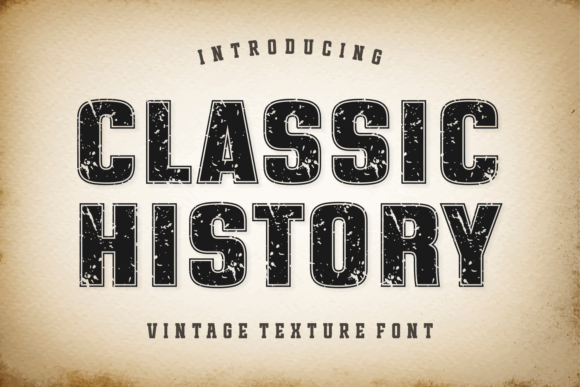
Classic History
Classic History is more than just a font; it's a portal to the past, offering a unique blend of nostalgia and sophistication that can elevate any design project. With its distinctively crafted display style, this retro font brings a sense of timeless elegance to modern visuals, making it an invaluable asset for designers seeking to infuse their work with historical charm.
Designed with a distressed texture, Classic History adds a layer of authenticity that resonates with audiences looking for something beyond the ordinary. Its versatility allows it to seamlessly integrate into various design contexts, from branding and logo creation to editorial layouts and packaging designs. This font not only enhances visual appeal but also strengthens brand identity by conveying a sense of heritage and character.
Applications in Graphic Design
For branding and logo design, Classic History provides a strong foundation for creating memorable and distinctive identities. It works exceptionally well for businesses aiming to evoke a sense of tradition or craftsmanship, whether in the form of a vintage shop, a historical museum, or a boutique clothing line. The font's ability to convey a military or educational flair makes it particularly effective for niche markets that require a specific aesthetic.
In marketing materials, Classic History can be used to create eye-catching headlines and subheadings that stand out in a crowded landscape. Whether designing posters, flyers, or brochures, this font adds a touch of class that can make all the difference in capturing attention and communicating a message effectively.
Enhancing Digital Presence
When it comes to social media content, Classic History offers a way to differentiate your brand in a visually saturated environment. Using this font in captions, banners, or graphics can help establish a cohesive visual language that aligns with your brand's story and values. It's particularly useful for creating engaging content that tells a story, whether through quotes, testimonials, or promotional messages.
In website and UI design, Classic History can be employed to create striking headings or call-to-action buttons that draw users in and guide them through the site. Its readability at larger sizes ensures that it remains effective even when used in digital formats, while its textured appearance adds depth and interest to otherwise flat interfaces.
Practical Tips for Designers
When selecting and using design elements like Classic History, consistency is key. Ensure that the font complements other visual components such as color palettes, imagery, and layout structures. A well-balanced design not only looks professional but also enhances user experience by guiding the viewer's eye and reinforcing the message being communicated.
Readability should always be a priority, especially when using display fonts. While Classic History is visually appealing, it's important to consider how it performs at smaller sizes or in dense text blocks. Pairing it with a clean, modern sans-serif font can help maintain clarity without sacrificing style.
- Use Classic History for headlines and titles to draw attention.
- Pair it with complementary fonts for a balanced look.
- Test the font across different mediums to ensure it maintains its integrity.
Ultimately, thoughtful design choices can significantly impact the effectiveness of your creative projects. By incorporating assets like Classic History, you not only enhance the aesthetics of your work but also enrich the narrative and emotional connection with your audience. Whether you're working on a personal project or a commercial campaign, the right typography can make all the difference in how your message is received and remembered.